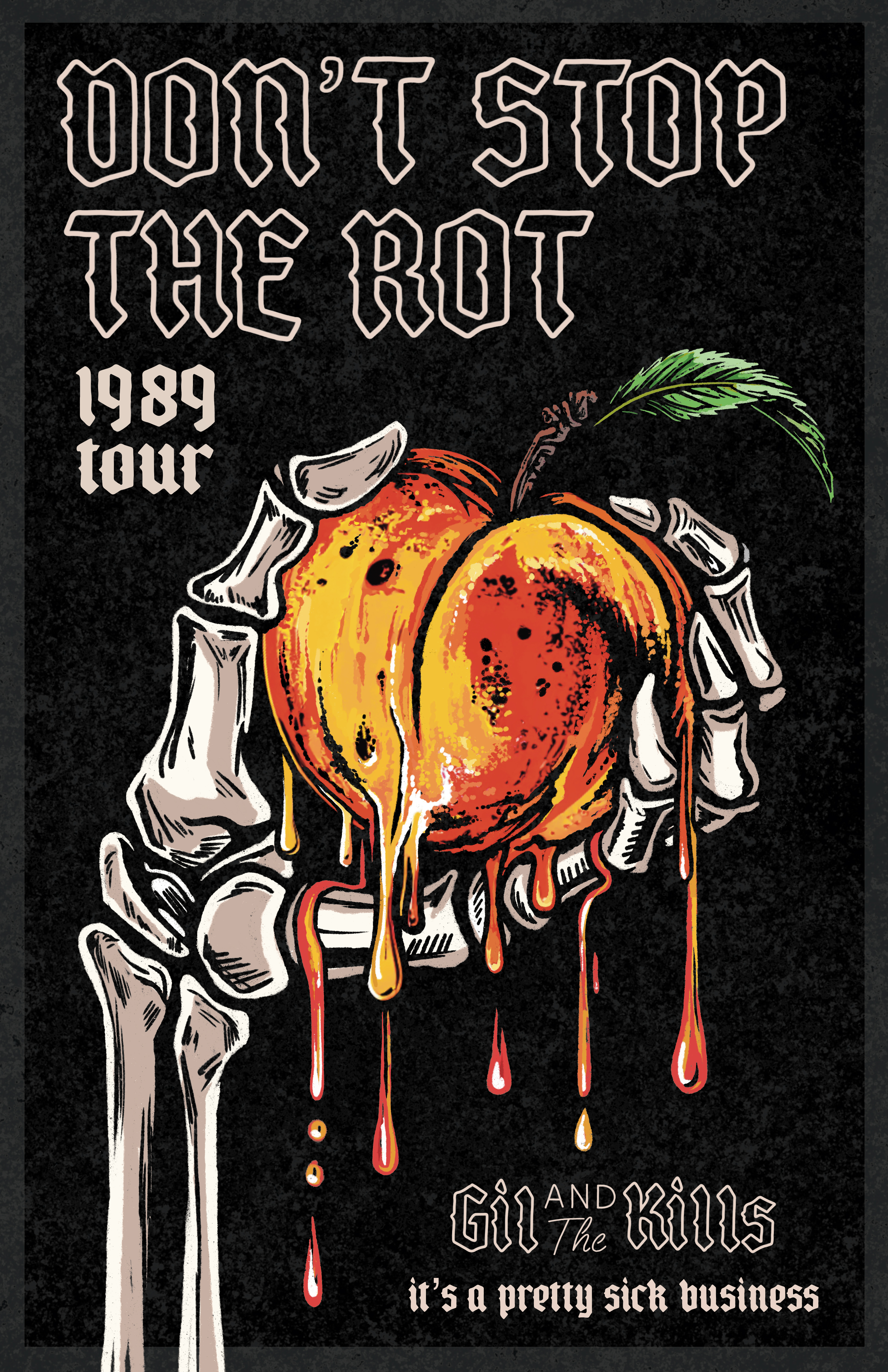
Countdown to Launch

Dear readers,

Today, we are two weeks away from Hot Wax pub day. It’s an exciting but incredibly busy time; if you’ve following me on social media, you’ve probably seen a lot of event announcements, some early reviews, and even some early swag. But I wanted to go ahead and send this reminder for those of you who are less chronically online.

The Hot Wax book tour starts one night early at the Strand in New York City; we’ll be in the rare books room on the second floor, and it’s worth the price of a ticket just to come and eyeball all the beautiful books. If you can’t make the launch, though, you New Yorkers have a second chance: we’re doing a special, one-off event at Rough Trade Below in Rockefeller Center, where I’ll be in conversation with Adam Weiner of the Tristate Area’s scrappiest rock band, Low Cut Connie. We’re going to spin some records and talk about all the music that went into the making of the book. I hope you’ll come out and jam with us.

If you’re outside of New York, never fear: we have so many events in September and October, there are pretty good odds I’ll be somewhere near your neck of the woods, signing books and taking questions and handing out bookmarks, stickers, buttons, crayons, candy, Matchbox cars, record store gift cards, and even (drumroll, please) these incredible tour posters designed by Hannah Taylor. It’s a real dream come true to have merch worthy of Gil & the Kills, the movers and shakers at the heart of Hot Wax. We have a hundred of these posters, and we’ll be giving one away–signed and numbered–at each of my events this fall.

If that’s not enough incentive, I don’t know what it is! We had such a blast on Graveyard tour last year and this time around we’ve pulled out all the stops, because everyone needs a little something to look forward to and with book bans cropping up all over the place and freedom of speech under threat, now is a real good time to come together and celebrate books. You can find working links to all of my upcoming appearances on the Events page. If you have questions, it’s best to reach out to the bookstore directly, as each event is a little different! If you think you want to come, jump on those tickets fast. Many of our events last year sold out, and the ones this fall are already filling up.

Finally, with just a few weeks left between me and pub day, I just want to say a little about pre-orders and how much they help support a book and the people who worked on it. Pre-ordering a book does a lot of good things: it helps the publisher decide how big the print run should be, which means we have enough copies for everyone at launch; it signals to bookstores and booksellers that this is a title worth stocking and talking about; and it helps our first-week sales numbers, which can make a big difference in the book’s future performance. Why do sales matter so much? Writing is an art, but at the end of the day, publishing is a business. Fabulous books like this cost money to edit and design and print and advertise. But sales numbers can also make or break an author: if the sales numbers aren’t good, good luck getting published again. I’ve lived it, and it’s heartbreaking. So if you want to support me and my work, this is one of the best and most impactful ways to do that. Thank to everyone who’s pre-ordered already, and thank you in advance to those of you haven’t yet. You can pre-order anywhere you get books: US pre-orders are here, and the UK is here.

I think it’ll be worth it, and worth the wait. I’ve been living in this book for a long time, and it’s turned into something really special. We can’t wait to share it with you.

M

New Work: HOT WAX

It’s been a busy few months for Team Rio. As is always the case with publishing, there’s a strange lag between when big things happen and when they can actually be big news. I’m thrilled to finally share this with you.

I wrote the first version of this book seven years ago. It’s been on a long, strange journey since then, and I’m so glad it’s found such a good home with Tim at Simon & Schuster. The next few years promise to be very busy, in a very good way. Without a great agent this never would have happened–I’m grateful for mine every day. But it also wouldn’t have happened without my readers, who have loved my first book so fiercely and made it possible for me to write more.

I can’t wait to bring you along on this fresh adventure. Because most of my online writing has migrated to my Substack newsletter, this is a great time to subscribe. You’ll still see all the big news here, but if you’re interested in the publishing process and want a peek behind the scenes as Hot Wax and Graveyard Shift go to press, Substack is the place to be. I hope you’ll join me. You can subscribe right here.

Thank you, as always, for reading.

M

New Work Coming Soon

Yesterday we got to share some great news on Publisher’s Marketplace. Now that the ink is dry, I’m excited to say that we have another book coming. In fall 2024, my first novella, Graveyard Shift, will hit the shelves.

We’ve been working on this for about six months, and I turned the first draft in to my editor last week. It’s been a delightful adventure in a new form, but I think–I hope–it will feel pleasantly familiar and refreshingly different from Villains. I’ll be sure to share cover and pre-order links as soon as we have them, and if you want to keep up with where we are in the publication process or you’re just curious what goes on behind the scenes in the book business, now’s a great time to subscribe to my newsletter on Substack. That’s where all the gory details will be.

Stay tuned. More news in the new year.

M

Introducing Discursions

Hello, lovely readers. This is a short post to introduce you to a new writing venture of mine. If you’re at all “online” you’ve probably heard other writers talk about Substack, and I am officially jumping on the bandwagon. You can read a little more about why in my first post, and I hope you’ll consider subscribing.

What’s the difference between Discursions and this old-fashioned website? Basically, it’s two different kinds of content. If you’re already on the mailing list here, you’ll get updates and announcements about events, interviews, new writing, etc. Substack is a little more casual; it’s where you’ll see longer posts on craft and industry, and more regular on-the-ground updates about where I am in the world and what I’m up to. It won’t be too overwhelming, probably a post a week, maybe two. I hope you’ll consider joining me on this little adventure.

Thanks, as always, for reading.

M

First Look at 5th Anniversary Edition

We’re excited to give you a glimpse at the illustrated anniversary edition of Villains, which will be published in the UK by Titan Books this fall. It’s a beautiful hardback, signed by me, and illustrated throughout–including the gorgeous colored endpapers pictured below. You can pre-order it here (yes, international shipping is available). Because there is a limited quantity, if you can’t stand to miss this one, place your order soon.

More to come.

M

The Bookshop is Open

If you spend any time on book Twitter, you may have noticed a recent upswing in chatter about Bookshop.org, “an online bookstore with a mission to financially support local, independent bookstores.” Here’s just one of many recent articles on the Bookshop phenomenon, and how this scrappy little website found an unexpected toehold during coronavirus. You can find a more in-depth profile of the project here.

This is such an encouraging development for the publishing industry, and it’s so heartening to see the reading community embrace an alternative to Amazon which puts books and the people who love them first. If you need something new to read during quarantine, I hope you’ll consider buying directly from your local bookstores or from Bookshop (which has made it possible for many local bookshops to stay in business by taking over distribution during social distancing).

If you’re not sure what you want to read next, you can find a few recommended reading lists on my Bookshop affiliate page. (I’m hoping to make more in the next few weeks so if you have any suggestions for lists you’d like to see, please send them my way.) Using Bookshop affiliate links also pays their author-owners an additional 10% with each sale, so by using an affiliate link, you’re not only supporting independent bookstores broadly, but supporting individual artists directly!

From just one artist, thank you–and happy reading.

Xx M

The Readiness is All

From what I’ve seen on my own and everyone else’s social media, one of the most common questions writers get is how you know when your work is “ready”–ready to show to beta readers, ready to submit to agents, ready to send to the agent you already have, ready to submit to publishers, or ready to go to press. Like most things in writing, there aren’t any straightforward answers, to any version of that question (except the last version, to which the answer is, “When the publisher decides it’s ready, because they’ll send it to press whether the writer is ready or not”). Sometimes deadlines make the decision for you, but when there’s a degree of autonomy involved, it’s much harder stop spinning your wheels and hit “send.”

I think this gets harder rather than easier the longer you write and the more revision you do, because you’ve had the time and experience to learn that every draft that seemed almost-perfect when you fist finished it looked like a holy mess a few weeks later. Sure, you might be feeling pretty good about Draft 5 now it’s done and dusted, but that’s exactly how you felt about Drafts 4, 3, and 2, and man, were you wrong about those. I published a book that went through 45 drafts all told and I still wish I could go back in time and make changes, even though it’s way too late for that now. And I think that’s the first thing you have to accept: that no draft will ever be perfect, no matter how many drafts you do. So instead of waiting for a perfect draft, you have to settle for a draft that’s good enough, despite the nagging premonition that six weeks from now when you’ve gotten some distance all the flaws you were blind to before will glare at you in blinking Vegas neon. (Art is for masochists, not romantics. Jot that down.)

So, when and how do you summon up enough “f$#k it” energy to send that thing to agents or your agent or editors or your editor even though you know it ain’t perfect and it probably never will be? Obviously it depends where you are in the process, but the abstract answer is “when you’ve done everything you can.” When you’re getting ready to query, that probably means you’ve done at least ten drafts and you’ve gotten some beta readers and maybe a freelance editor and done some of those drafts with their feedback in mind and you think it’s the best it can be without professional (i.e., an agent’s) input. When you’ve already got an agent and you’re getting ready to give them something new, that’s a whole different ball game–because you don’t need to convince them to take you on as a client anymore. Sometimes there’s more anxiety involved with a second book because you’re both asking whether the second book is going to live up to the expectations the first one created. At the same time, the working relationship has had time to grow and develop and you’re already in this together. Of course (of course) you still want to impress your agent, but it’s also not so gauche to say, “I know I still need to work on X, Y,  and Z in this manuscript, but I wanted to get your input first.” Submitting to editors is a decision you and your agent necessarily make together, and you can multiply the number of people involved and subtract from how much decision-making power lies with you, the author, the farther along in the process you get and closer you come to pub day. But people usually aren’t asking about that part of the process, because by then they’ve got the agent and the editor and everyone else at the imprint ready to give them the answer.

As for those early stages, when the decision rests largely with the writer, it’s a lot harder to take your foot off the brake and let it go. Personally I’ve found there are a couple of telltale signs I’m reaching the point of no return:

  1. Instead of identifying big problems that span multiple scenes or chapters, I’m doing the sort of surgery that only requires local anesthetic.
  2. I’m changing things and then changing them back again in the next draft to what they were before.
  3. I’m hunting for things to fix instead of finding them right away.

When I start to notice this pattern repeating itself from draft to draft (and chapter to chapter and scene to scene) that’s usually a good sign that I’ve used up my own resources and it’s time to punt to someone else. Then I take a break from the work and walk away from it, ideally for at least two weeks and ideally when I have plenty of other things to occupy my mind. This time around it was two weeks’ cramming in the home stretch before my comps exam, when I wouldn’t have had time to think about writing if I wanted to. Having come back to the MS over the last few days, I still feel the same way I did two weeks ago–namely, that I’ve done all I can do and it’s time to make a few cosmetic changes to bring the document up to industry standards and send the cursèd thing off to my agent to read.

At this point in the process, I’m usually feeling a little ambivalent. I’m still excited about the project but don’t want to get my hopes up because I’m still too close to it to be objective about the book as a book, as opposed to the book in its current iteration. And I think when aspiring authors ask questions about how they know when they’re ready what they’re really asking about is how to avoid that feeling, that uncertainty. To be honest, I don’t think you can. Like I said, art is for masochists. Self-doubt and self-confidence will always go hand in hand. That–like the fact that no draft will ever be perfect–is one of those things you just have to accept. So instead of waiting for the day when you feel unambiguously positive about your manuscript, because that day will literally never come, you wait for the day when you feel you’ve done everything in your power to improve it, and you’re ready for someone else’s input. You don’t have to be ready to publish it. You don’t have to be ready to show it to the world. You just have to feel confident that the work that you’ve done was the best you could do on your own and you’re ready now for someone else to read it and say, “I like what you’ve got so far. Here’s what still needs work.”

M

Time is a Construct, but New Beginnings Are Nice

Like most sane people, I’ve never set much stock in new year’s resolutions. They’re usually overly ambitious, often the remedy for some perceived personal failing, and nearly always forgotten by February. However, there’s something to be said for taking a moment to reflect at the start of a new year and ask yourself what you could be doing differently—whether you’re interested in improving yourself or your quality of life or some combination of the two. I think writers are particularly prone to that impulse, as beings constantly in search of improvement and, more importantly, reasons to keep at it. Writing is hard. Publishing is harder. Trying to juggle either (or both) with another job—as all of us except the very luckiest have to do—can result in feeling a bit like Sisyphus, struggling to push a boulder up a mountain only to watch it roll back down to the bottom again. This is part of the reason most writing resolutions I see make me sigh in a sad, cynical way, shake my head and go back to my coffee. You’re going to write 3,000 words every day this year? Sure, Jan.

However, there’s no ignoring the fact that the way I worked the last six months is completely unsustainable. There wasn’t a whole lot I could do about it—it was just a uniquely crappy combination of uniquely crappy circumstances which resulted in my working about sixteen hours a day, every day, because that was the only way everything was going to get done. (And still everything didn’t get done. One of my mentors kindly agreed to extend one of my deadlines until February, an unlooked-for stay of execution.) As any of my friends who have patiently endured my endless bitching about the situation would attest, I was miserable. The way I described it to someone was “tiptoeing along the edge of a nervous breakdown.” It is not easy to do good work when you’re living that way.

But enough of the pity party. The point of this post—the first in very long while, and I’m sure it’s no mystery why—is not simply to whine into the ether, but rather to start 2019 on a positive note. Which, frankly, feels like an act of defiance in and of itself, given the way 2018 went. I still don’t really believe in resolutions, but I do believe in setting realistic goals with a gameplan and a timeline to achieve them. So here’s what I’ve got in mind for 2019:

1. Find a better work-life balance.

Writing and academia are both fields where a culture of overwork is normalized and often romanticized. Add to that the fact that I have always been a fiercely ambitious person, and the result is a lot of days where I only stop working long enough to shower and eat and even when I’m doing those things I’m probably brainstorming, trying to think my way out of a plot hole or twist a troublesome thesis statement into better shape. It’s not a healthy way to live and it’s not a healthy way to work. I don’t like that I’ve become the sort of person who gets anxious when they aren’t working towards finishing a specific task—which might seem ironic, given the nature of this list. However, precisely because I’m so task-oriented, I am assigning myself the task of doing something I enjoy every day without worrying about how “productive” it is. I am giving myself permission—and a direct order—to relax.

2. Multi-task less.

Not to brag, but I am awesome at multi-tasking. I can listen to music and read a book and do laundry and eat lunch and play with the dog and keep tabs on two different group chats and three different email accounts all at the same time. It often feels like the only way to get everything done. But dividing my attention between four different things (or five, or six, or whatever) often leaves me feeling like I haven’t really engaged in a meaningful way with any of those things. I’m not too worried about having a meaningful relationship with my laundry, but I would like to spend more time doing only one thing at a time, and devoting all of my attention to that thing—even if it’s one of those non-productive enjoyable things, like reading for pleasure or listening to music. As Ron Swanson might put it, “Never half-ass two things. Whole-ass one thing.” That’s my new mantra for 2019.

3. Get more organized.

Anybody who knows me might find this kind of a strange objective, as I’m not really what you’d call disorganized. I usually know exactly what my deadlines are and how much work I have to do each day to meet them. I outline fanatically, I love lists, and I have five different calendars color-coded in such a way to make Leslie Knope swoon. But that’s not really what I’m talking about here. I’m talking about organization in a more abstract sense. I want to get my ideas and priorities better organized. I want to think more about the big picture instead of focusing myopically on the daily minutiae. I want my headspace more comfortable and less cluttered. I don’t really know how to do this. It may be as big as trying to articulate those ideas and priorities or as small as trying to check my obsessive impulses and ask whether I’m missing the forest for the trees. “Detail-oriented,” contrary to what every job interviewer ever seems to think, is not always an indisputably good thing.

4. Follow my own advice.

I’m constantly telling young(er) writers that writing isn’t a race and that they should pump the brakes and slow down and stop panicking about not having a book deal at age 22. And yet, I have wasted a lot of energy worrying that my career isn’t moving fast enough or as fast as I want it to while we chase that notoriously difficult second book deal. I think it comes back to a deep fear that this is as good as it gets—a vague, muffled terror that I peaked at 25 and I’m never getting another book published and I’ll never be able to get a tenure-track job and I’ll probably die alone surrounded by unpublished manuscripts and rejected grant applications because I was so freaked out by the possibility of Failure-with-a-capital-F that I worked like a lunatic and left myself no time for any sort of personal life. (Thanks, capitalism.) That is, frankly, ridiculous and I am calling myself on my bullshit. Why do I think I’m exempt from all the reassuring truisms I tell my friends when they have the same concerns about life? I’m so quick to tell other people they’re smart and capable and full of potential and life doesn’t have any deadlines. I need to work on saying those same things to myself—and believing them.

5. Stay ambitious.

Just because my quality of life needs some serious improvement and I need to ameliorate my workaholism and I want to take some of the unnecessary pressure off myself doesn’t mean that I can’t still hunt down those big game goals. I have a lot of plans for the year ahead. I want to take a pretty epic research trip. I want to get another manuscript to my agent and I want it to be my best work yet. I have a couple of short stories I want to write or finish (and maybe even submit somewhere). I want to write more nonfiction, spend more time cultivating my voice as a person instead of my voice as a narrator of someone else’s story. I want to produce some articles and conference papers and knock my comprehensive exams out of the park. But I want to do all that stuff without punishing myself for falling short of impossible expectations. I want to find a balance between ambition and enjoyment and not beat myself up for wanting that balance. Because what’s the point of all this productivity if you don’t have time to enjoy what you’re producing? I refuse to fall into that quicksand again this year.

I don’t know if this list—odd and intensely personal as it is—will be helpful to anybody else. I don’t even really know if it will be helpful to me. But getting my thoughts about all this (figuratively) down on paper is, I think, a step in the right direction. I’m not going to make any sweeping declarations about what a great year it’s going to be or how it can’t possibly be as bad as last year, because both of those things seem unlikely or outright delusional, just given the way the world is turning. Instead I’ll just say I’m as ready as I’ll ever be for 2019. Bring it on.

I wish you the best balance of ambition and enjoyment in the year to come.

Xx M

Publishing Q&A, Part 2

Over the past week, my agent, my editor, and I have been collecting your questions about books, publishing, and If We Were Villains. You can read the first round of answers here, and the second round below (but first a quick reminder who we are):

Arielle Datz is a New York transplant from Los Angeles, who started as an intern at Dunow, Carlson, & Lerner Literary Agency in 2011. She then worked in the foreign rights department at WME, followed by the Elizabeth Kaplan Literary Agency. She returned to DCL full-time in 2015. She is currently obsessed with April the Pregnant Giraffe (aprilthegiraffe.com). Other loves include whales, contemporary chamber music, and noodles in all forms.

Christine Kopprasch is an Executive Editor at Flatiron Books, where she recently published New York Times bestsellers The Dry and Behind Her Eyes. She is publishing the upcoming debuts If We Were Villains and Tornado Weather. Christine previously worked at Crown, where her acquisitions included New York Times bestseller Bittersweet, New York Times bestseller The Little Paris Bookshop, and The Vegetarian, which won the Man Booker International and was a New York Times Top 10 Best Book of 2016. Christine is a terrible but avid gardener and an obsessive reader. She has a baby at home, so she basically hasn’t slept in a year. (Her opinions are her own.)

M. L. Rio is the author of If We Were Villains, coming to a bookstore near you on April 11th from Flatiron Books. Before she was an author she was an actor, and before she was an actor she was just a word nerd whose only friends were books. She holds a master’s degree in Shakespeare Studies from King’s College London, and probably won’t break away from the cult of academia any time soon. Her other favorite things include music, wine, and her dog Marlowe.

And without any further ado, our next questions from you.


For Arielle/Christine: What did you study and when did you realize this is what you wanted to do?

A: I majored in English literature, and knew when I graduated that I wanted to pursue a career in publishing, although at the time I didn’t know which part of publishing. After interning and working at a few literary agencies, I realized that I enjoyed the relationship that agents have with authors and the role that we play in the publishing world.

C: I was an English major with a Women’s Studies minor. English was a natural fit for me because I loved reading, and I interned at a literary agency when I was in college because I thought publishing might be interesting. That wasn’t a positive experience, so I actually ended up assistant teaching third and fourth grades for two years before I interned at another literary agency and got my first editorial assistant job. I always thought I would like to work with books. It’s the kind of job that people who knew me in elementary school say, “Of course!” when they hear what I do – I was always obsessed with books and writing, and I delighted in tinkering with other people’s words. I’m lucky I have the chance.

For C: 1) What types of editors are there, and what are their roles? I know of acquisitions editor and manuscript editor, but I am not quite sure what they entail. 2) What kind of education is looked for in editors? I’m interested in becoming and editor, and I know where to start. Should I shoot for an MA or is a BA fine? Also, how do I get my foot in the door at big publishing companies? What do companies look for in editors? What entry level jobs are there for me to pursue?

C: 1) I am the “editor,” full stop, in US parlance, as I both acquire and edit the manuscript. I think this may differ by country, as some UK houses have a separation between the two jobs, but I’m not sure about the details. Broadly: to acquire, I read about 500 submissions a year (or parts of them) and sort through what I like and think readers will like. To edit, I go through the manuscript very carefully and give the author my thoughts about what is and isn’t working.

2) I can go on about getting a job in publishing for too long. Real talk: It’s hard! BA is fine. I spent 6 months unemployed while I tried to get interviews in publishing, so I did an unpaid internship at a literary agency to help me connect with people in the industry. Having someone who knew me recommend me directly to the editor who was hiring was much more effective for me than going through HR. That’s not possible for everyone, of course, depending on where you live in the world and finances. I saved up on my tiny teacher’s salary so I could have some flexibility, and I had parents who lived within commuting distance of the city so I could get in for interviews and internships without committing to an apartment before I had a job.

The entry-level jobs are mostly for assistants who will do a lot of administrative work for years. They aren’t glamorous or easy! I was highly motivated (and I had a great first boss), so I was devoted to proving myself. I stayed up late reading as many of my editor boss’s submissions as I could, sending her my thoughts about what I was reading. I told her what to read first, what I didn’t love but thought she might because I knew her taste, and why I would reject the rest. I also read her edits and paid attention. She was brilliant and I would read every note she had for an author. Then I started “editing behind” her: after she was done editing a book, I would go through it and see if I had other thoughts she might find helpful. She was kind enough to not only consider and use my thoughts, but also to tell the agents & authors when a suggestion had been mine, which increased my credibility with them. (And when she left and her projects were reassigned, the agents and I could make a credible case for why I should keep the books.) Companies are looking for someone who reads widely and deeply, is fanatically interested in supporting an editor by doing lots of tiresome, often thankless work (forms, copying, mailing, setting up meetings, scheduling lunches, drafting rejections, contract requests, system admin) and adding the editorial work on top of that.

I was focused on the editorial path, but if you’re not totally sure if that’s for you, there are lots of other jobs in books to consider: working on covers or interior designs if you’re artistic, working on the accounting side if you’re math-minded, working in publicity if you like pitching books to people you don’t know, working in marketing if you are business-minded, etc. And there’s also the agenting side. All of these people are important in the process, so you don’t have to be an editor to work with books.

For C:When editing a manuscript do you only focus on things like structure, character, theme etc. or also on the language? I mean this in the sense of getting the words right or saying “I don’t think these specific words work here”.

C: All of those things! I tend to look at the big picture issues first, because there is no point in line editing chapters that may change substantially. By the final round I usually have a lot to say about specific words and phrases. For example, I always keep a running list of words that have jumped out at me as possibly being overused.  What language I think needs editing depends on the manuscript, of course. M is such an editing expert (if I may brag on her a bit!) that Villains had already been through many, many drafts when I first read it, and she had picked up on many of her own quirks and addressed them. Not only did that make it fun to read, but it left me free to notice different things than I might have if more obvious issues needed to be addressed.

For A/C: Since upmarket fiction is a bit of a “combination”: what are you more likely to be interested in, a manuscript with great characters whose plot needs some work or one with a strong plot where the characters need tinkering? Or do you feel that if either of those still need work then the story isn’t worked out enough yet, although I guess there’s always room for improvement?

A: I don’t have a clear answer for this. When I read a manuscript, if I fall in love with it, I’m willing to do the work on it. If I can find a way in, then I will try to work with the writer to realize that book’s potential.

C: It’s easier to fall in love when both characters and plot are there, but if I have to choose, I’m more likely interested when the plot needs work. I just acquired two very different books that each had wonderful characters that leapt off the page, but both needed major plot changes (in my opinion). One was brilliantly written and conceived but didn’t yet have the page-turning momentum that makes you race through a book, and the other’s central mystery didn’t yet make the best use of the amazing main character. I think they will have both of your listed attributes once the authors and I are finished with them! Even if a book isn’t quite working for me, a strong voice can keep me interested in thinking about whether I have plot ideas to contribute.

For C: For an as of yet unpublished author who’s work leans toward the literary end of the spectrum what is the best way to attract the attention of a mainstream publisher? I’ve read alot and it seems to be a combination of published submissions and contest wins which result in a literary agent which THEN results (maybe) in a book deal. How do you go about getting a publisher to invest time and money in your project? I’m not ready to publish yet (I need to improve) but when I am, how?

C: Yes, published submissions and contest wins can help you get noticed. But where I’ve worked, it really is almost all about the book on submission. If you have great credits to your name, I might decide to read that submission before something else in my pile, but in the end the only thing that really matters to me is what’s on the page. Not platform or previous publications, just how I feel when I’m reading. If I can’t put it down, that’s the best way to get my attention.

For A/C: What makes a manuscript stand out to an agent or publisher? What stood out in the case of IWWV?

A: There’s no right answer for the first part of your question. Every agent and publisher has their own unique taste, so what makes a manuscript stand out depends on the reader. For IWWV, I started reading and got immediately sucked in, and then as I kept reading my excitement for the book and about the book just grew. I can’t point to a specific thing and say, “That right there, that did it.” It’s more that, as I read, I felt energized and electrified. I’d compare it to feeling a crush for the first time.

C: Well, I don’t even think M’s ever seen this, but here’s part of the note I sent to my boss before I’d finished IWWV to tell her I was loving it and wanted the team to read with me: “I feel like it’s really smart without being pretentious, suspenseful without feeling fake, and a great friendship & coming of age story. It helps to know Shakespeare but even without being an expert it is very compelling.” Not only did the plot and conceit stand out, but also the manuscript was so clean and sharp and carefully crafted that I knew the author was someone I wanted to work with. Every word had been scrutinized, which I could tell only because the read was so effortless. And I love a book that assumes readers are intelligent and intellectually curious.

For A/C/M: How long did the whole process take, from starting to write IWWV to deciding it was ready for publishing?

A: Let’s see: for IWWV, M and I started working together in March 2015, and we did a few revisions before I felt ready to submit to publishers. Flatiron acquired it in June 2015, more revisions were done, and here we are with publication fast approaching.

C: I got the submission in June 2015, so I’ve been involved with it for coming up on two years.

M: It was definitely a longer process for me, because I worked on the manuscript for about a year by myself before Arielle came into the picture, and then a few months later, Christine. I’ve been working on this thing since just about this same time in 2014. So, three years in the making for me.

For A/C/M: What was the most troublesome or difficult part of the publishing process? Like, were there any unexpected bumps in the road?

M: I think with any creative project that takes place over the course of two years or more, you’re bound to hit some unexpected bumps. Actually the timeline was a bump in and of itself. Our original release date was in January 2017 and I don’t mind admitting that I was a little bit heartbroken when I heard we were going to have to push it back to April. Down the line I completely understand why we decided to do that and I do think it was the right call—I mean, nobody buys books in January because they all just got books for Christmas—but at the time it felt like a whole lifetime longer to have to wait. I will also admit to being the lone dissenting opinion in the cover art conversation. But that’s part of the beauty and also the challenge of having so many people work on one piece of art: there are bound to be things not everyone agrees about.

A: Speaking to what M said, I think one of the hardest parts of the publishing process (especially for a first time author), is reconciling the dream of a book with the realities of the publishing industry. Compromises are inevitable, but that doesn’t make them easy. Ultimately the author, agent, and editor/publisher all want to create the best book possible, but unfortunately agreeing on what that actually is can mean some difficult conversations.

C: I always try to share my major editorial ideas with an author before I buy her book, so she doesn’t get shell-shocked later. But if I’m remembering correctly, my biggest suggested change to Villains came out of my third (or so) reading of the manuscript. Luckily M jumped on it, but as I was sending that letter I did wonder what she would think about this rather significant plot change we hadn’t previously discussed.


We have many more questions in the queue, so keep an eye out!

–M